Designing with the Unseen: Harnessing Light to Shape Space and Emotion
We do not see light itself; we see what it reveals. Treating light as an invisible design element transforms buildings from static containers into living, breathing experiences. When mastered, light sculpts volume, clarifies function, directs movement, and kindles emotion—often without a single visible object calling attention to itself. This guide unpacks principles, methods, and tools you can use to shape space and feeling through the orchestration of daylight and electric light.
Why the Unseen Matters: How Light Shapes Perception and Emotion
Light silently defines edges, depths, rhythms, and hierarchies. It calibrates our attention and steadies our internal clocks. Considering “Light as an invisible design element” frees us to see light not as a fixture list, but as a narrative medium—one that tells users where to look, what to do, and how to feel.
- Perception through contrast: The human visual system is contrast-driven. We detect changes in luminance, not absolute brightness, using edges and gradients to infer shape and distance.
- Emotion through tone: Warmer, lower-intensity layers tend to relax; cooler, brighter layers can energize. Changes in lighting pattern over time can add drama or calm.
- Circadian entrainment: Light orchestrates melatonin and cortisol rhythms. Morning-rich daylight (blue-enriched, higher intensity) promotes alertness; warm, low light at night supports rest.
- Spatial cognition: Light creates legible hierarchies—what is foreground vs. background, safe vs. risky, public vs. private—silently guiding wayfinding and behavior.
The Language of Light: Variables Designers Control
To craft with the unseen, you must fluently combine these interlocking variables. Each is a lever for shaping mood, function, and identity.
Intensity and Illuminance
Illuminance (lux) describes light falling on a surface. Typical targets: 100–300 lux for living rooms, 300–500 lux for general office work, 500–1000 lux for task/retail detail, and sub-50 lux for sensitive museum pieces. Calibrate not only absolute values but ratios—layering bright focal zones against softer backgrounds to pull the eye.
Direction and Distribution
- Grazing: Skims across textured surfaces to reveal relief—excellent for stone, brick, and wood grain.
- Wall washing: Smooths surfaces to expand apparent width and increase perceived brightness without glare.
- Uplighting: Opens volume, draws attention to ceilings, reduces cave effect.
- Downlighting: Clarifies tasks and circulation; avoid over-reliance to prevent flat, spotty ceilings.
- Backlighting and silhouette: Carves crisp forms; effective for branding, signage, and art.
Color Temperature and Spectrum
Correlated color temperature (CCT) frames mood: 2700–3000K feels intimate; 3000–3500K is balanced; 4000–5000K feels crisp and alert. Beyond CCT, spectral power distribution shapes color fidelity and circadian effect. Aim for CRI 90+ (or TM-30: Rf 85+ and Rg near 100) where material accuracy matters.
Contrast, Layers, and Hierarchy
- Ambient: Gentle base illumination that sets a calm tonal field.
- Task: Focused, glare-controlled light to support specific activities.
- Accent: Punch and sparkle to highlight art, merchandise, or architectural details.
- Decorative: Character-driven fixtures that also serve as visual anchors.
Thoughtfully varied ratios—often 1:3 for everyday hierarchy, up to 1:10 for dramatic retail or hospitality—turn light into choreography rather than mere visibility.
Time and Dynamics
Lighting is a temporal medium. Use dimming, tunable white, and scene controls to align with activities and circadian cycles. Dynamic light sustains interest, supports transitions, and adds narrative rhythm.
Glare and Visual Comfort
Glare undermines comfort and performance. Specify luminaires with shielding, diffusers, and beam control; aim for UGR < 19 in offices. Control veiling reflections on monitors and glossy surfaces using careful placement and beam angles.
Daylight: The Original and Essential Light Source
Daylight provides unmatched spectrum, variation, and connection to nature. Designing for it first reduces energy demand, grounds circadian health, and improves wellbeing.
Reading Site and Climate
- Orientation: South light is abundant and controllable; east is crisp and cool; west is warm but potentially harsh; north is diffuse and consistent.
- Sun path and seasons: Shape apertures for seasonal shifts; deepen overhangs for high summer sun, open to low winter light.
- Sky conditions: Overcast climates reward higher apertures and skylights; clear-sky regions need robust shading.
Aperture Strategies
- Windows: Balance view, glare, and heat. Sill height, head height, and width orchestrate eye-level narratives and daylight penetration.
- Clerestories: Deliver top-of-room wash without direct view glare.
- Skylights and light wells: Pull light deep into plan; use diffusers or baffles to soften.
Shading and Modulation
- Exterior devices: Louvers, fins, brise-soleil—control heat and glare before they enter.
- Interior control: Roller shades, venetians, electrochromic glass—for fine-tuned visual comfort.
- Reflectors and bounces: Light shelves, pale ceilings, and high-reflectance walls to redistribute daylight.
Daylight Metrics and Controls
- Daylight autonomy (DA/sDA): Percent of time a point meets a target lux using only daylight.
- UDI: Useful daylight illuminance—proportion of time within a comfortable range.
- ASE: Annual sunlight exposure—flags potential glare/overheating.
Pair geometry with daylight harvesting—photosensors that dim electric light when sunlight suffices—to preserve visual consistency and cut energy.
Electric Light as a Sculptural Medium
When day fades or depth is needed, electric light completes the composition. Treat it as invisible architecture rather than decoration.
Layering with Purpose
- Ambient: Coves, wall-washes, and indirect pendants create breathable volumes.
- Task: Desk lamps, under-cabinet strips, low-glare downlights keep work planes readable.
- Accent: Narrow-beam spots (10–25°) add drama and direct attention.
Materiality and Reflectance
Materials are the canvas. High reflectance ceilings (0.8+) amplify bounce; mid-tone walls (0.5–0.7) hold gradients; dark finishes absorb and sharpen highlights. Gloss emphasizes specular highlights and silhouette; matte expands softness. Select finish strategically to support the light story.
Color Rendering and Identity
Use CRI 90+ (or TM-30 Rf≥85 with balanced Rg) in retail, galleries, cuisine, and healthcare to maintain brand fidelity and skin tones. Warm-dim engines simulate incandescent falloff for hospitality intimacy; precise SPD preserves brand palettes.
Beam Control Techniques
- Wall washing vs. grazing: Choose wash for breadth, graze for texture.
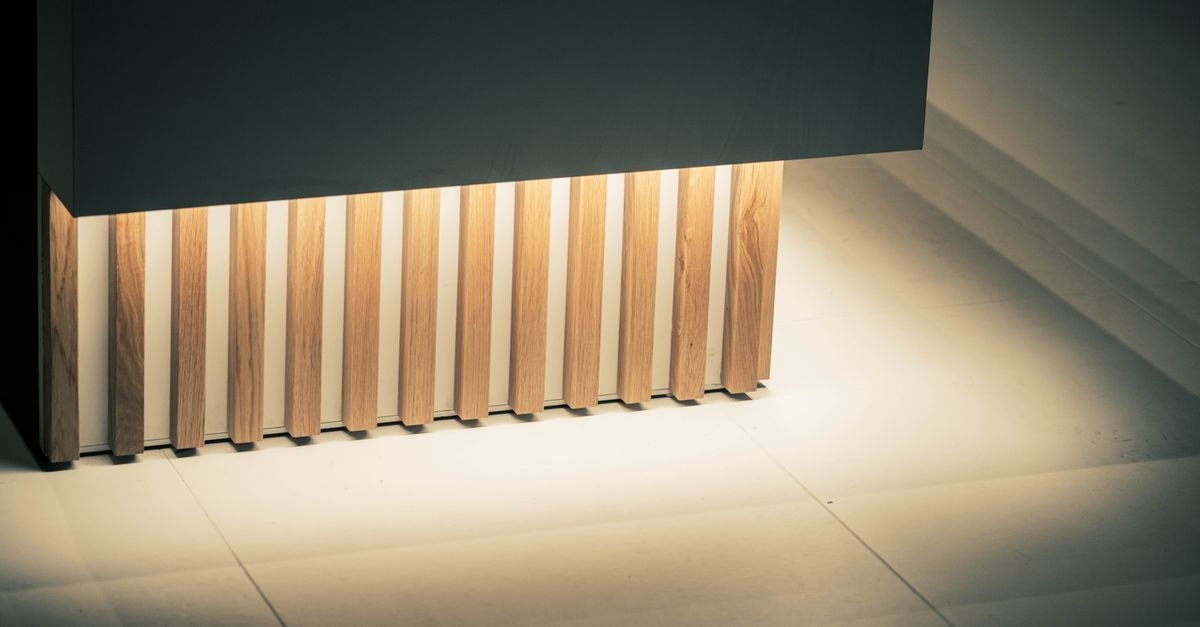
- Coves: Hidden linear light for volumetric lift.
- Asymmetric optics: Uniform shelves, signage, and verticals.
- Adjustability: Aimable heads, lenses, and louvers for evolving programs.
Designing for Emotion and Behavior
Light sets atmosphere and tempo, cueing social behavior and performance. Treat “Light as an invisible design element” to choreograph how a space feels across the day.
Hospitality
- Arrival: Warm pools of light create welcome and orientation.
- Dining: 200–300 lux on tables with soft vertical glow for faces; warm-dim scenes through the evening.
- Bar: Accents and sparkle (500–1000 lux on bottles) against darker backgrounds for depth and allure.
Retail and Brand
- Hierarchy: 3:1 to 10:1 accent-to-ambient ratio to guide attention.
- Color fidelity: CRI 90+/TM-30 tuned to merchandise; adapt CCT by product type.
- Wayfinding: Lit paths and bright landmarks reduce decision friction and increase dwell time.
Workplace
- Glare control: UGR < 19, balanced luminance on verticals to reduce eye strain.
- Task/ambient split: 300–500 lux ambient plus personal task lights for autonomy.
- Biological support: Morning cooler, brighter scenes; afternoon softer tones; evening warm-down for late workers.
Residential
- Evening wind-down: 2700K, dimmed layers, minimal blue content for relaxation.
- Kitchen: 300–500 lux task with CRI 90+ for food color accuracy.
- Bedrooms: Low vertical luminance levels; indirect paths for night navigation.
Healthcare
- Patient rooms: Dynamic, low-glare vertical illumination supporting circadian alignment.
- Staff zones: Brighter, cooler light for alertness; scene presets for procedures.
- Wayfinding: Gentle gradients reduce anxiety, aid orientation.
Museums and Galleries
- Conservation: 50–200 lux limits for sensitive works; UV/IR control.
- Layering: Uniform wall-wash for legibility plus tight accents for emphasis.
- Shadow literacy: Work with curators to decide when shadow adds meaning.
Human-Centric and Circadian Strategies
Circadian-aware design aligns light with biology. Consider melanopic metrics, not just photopic lux.
- Morning: Cooler (4000–6500K), higher intensity to boost alertness.
- Midday: Balanced, high vertical illuminance on faces to sustain performance.
- Evening: Warm (2200–2700K), low intensity to protect melatonin.
WELL Building Standard and similar frameworks provide targets for equivalent melanopic lux (EML) or comparable criteria. Tunable-white systems and thoughtful daylight integration let you script daily light journeys that feel natural rather than theatrical.
Sustainability and Performance
Invisible design should also be efficient and durable, minimizing energy and waste while maximizing delight.
Efficient Sources and Lifetimes
- LED efficacy: 120+ lm/W is common for architectural sources.
- Longevity: L70/B10 ratings and TM-21 projections help plan maintenance.
- Drivers: Low flicker, dim-to-off, and high power factor for quality and control.
Controls and Sensing
- Occupancy/vacancy: Reduce burn time without compromising experience.
- Daylight harvesting: Maintain consistent scenes while cutting energy.
- Scheduling and scenes: Align to use-cases and circadian patterns.
Standards and Codes
- Energy: ASHRAE 90.1, IECC, EPBD guide power densities and controls.
- Quality: IES, CIBSE, EN 12464-1 for illuminance and glare limits.
- Health and sustainability: WELL, LEED, BREEAM, and DarkSky for responsible practice.
Embodied Impacts and Circularity
- Modularity: Specify field-replaceable LEDs and drivers to extend life.
- Materials: Prefer low-VOC finishes and recycled/recyclable housings.
- Upgradeable controls: Open protocols and firmware paths to avoid obsolescence.
From Concept to Reality: Process and Tools
Designing with the unseen demands iteration—sketch, simulate, mock up, measure, and refine.
Concept Narratives
- Storyboards: Map user journeys and lighting moods across time.
- Light diagrams: Trace intended gradients, focal points, and shadows.
- Material palettes: Choose finishes that support the light story.
Mock-Ups and Prototyping
- Scale tests: Try wall-wash spacing, cove apertures, louvers on site when possible.
- Samples: Evaluate beam spreads, lenses, and diffusion with real materials.
- Scene rehearsal: Dimming and tuning early to pre-empt surprises.
Simulation and Measurement
- Software: Radiance, DIALux, Relux, AGi32, and Honeybee/Ladybug for daylight/electric models.
- Photometry: Use IES or LDT files; validate beam angles and candela distributions.
- Field tools: Lux meters, colorimeters, and flicker meters for commissioning.
Case Studies in Shaping Space with the Unseen
Gallery: Whispered Precision
Objective: Preserve delicate works while ensuring clarity and emotional resonance.
- Base layer: Uniform wall washing at 100–150 lux to support legibility.
- Accents: 200–300 lux tight beams on key pieces, controlled spill for micro-contrast.
- Glare control: Deep regress heads, baffles; visitor eye adaptation considered at entry.
- Daylight: North-facing clerestories with baffles; ASE moderated with interior shading.
Impact: Works float against calm verticals; visitors dwell longer and feel guided by subtle light cues—an example of “Light as an invisible design element” elevating curation.
Restaurant: Intimacy by Layers
Objective: Day-to-night transition from brunch brightness to dinner intimacy.
- Ambient: Warm coves lift ceilings; vertical grazes add texture to brick.
- Task: Table spots at ~200 lux, tight cutoffs to avoid glare.
- Decorative: Pendants as identity anchors; dim-to-warm engines.
- Scenes: Brunch higher ambient, dinner lower ambient and stronger accents.
Impact: The room breathes with time; guests feel cocooned without realizing the precision at work.
Office: Clarity and Calm
Objective: Focus and collaboration without fatigue.
- Uniform verticals for faces and walls to ease eye strain.
- Task/ambient split to personalize light without energy waste.
- Tunable white for morning lift and afternoon balancing.
- Glare control via diffusers, shielding, and layout relative to screens.
Impact: Measurable reduction in complaints; perceived brightness rises even at lower power densities.
Compact Home: Space from Light
Objective: Make a small apartment feel generous and serene.
- Ceiling coves to elongate height; consistent wall-wash to widen.
- Unified 2700–3000K palette; accents on art and plants for life.
- Low-glare path lights for night comfort.
Impact: Fewer fixtures, more atmosphere—a demonstration of “Light as an invisible design element” unlocking perceived volume.
Practical Checklists
Concept and Schematic
- Define emotional arc and primary scenes by time of day.
- Sketch light paths: what glows, what recedes, where shadows fall.
- Prioritize daylight: aperture strategy, shading, reflectance.
- Choose material finishes to match lighting intent.
Design Development
- Select optics, beam angles, and distributions for each layer.
- Model sDA/ASE and electric illuminance; iterate layouts.
- Coordinate with mechanical and architectural details for integration.
- Draft control narratives: occupancy, daylight, scenes, schedules.
Construction and Commissioning
- Mock up critical details; confirm glare and wash uniformity.
- Measure and aim; set dim levels and color tunes per scene.
- Train users and staff; document presets and maintenance.
- Post-occupancy tuning after 2–4 weeks of actual use.
Common Pitfalls to Avoid
- Over-lighting: More lumens reduce subtlety and raise glare/energy.
- Downlight grids: Flat, spotty ceilings with no hierarchy.
- Ignoring verticals: Faces and walls shape perception more than desks do.
- Color clashes: Mismatched CCT/CRI across zones undermines cohesion.
- Control neglect: Great design without scenes/dimming falls flat.
Mini Glossary
- Illuminance (lux): Light falling on a surface.
- Luminance (cd/m²): Brightness leaving a surface in a given direction.
- CCT (K): Apparent warmth/coolness of white light.
- CRI/TM-30: Indices describing color fidelity and gamut.
- UGR: Unified glare rating; lower is better.
- EML: Equivalent melanopic lux; a proxy for circadian stimulus.
Designing with Intention: Bringing It All Together
When you treat “Light as an invisible design element,” the plan dissolves into experience. Light becomes structure without mass, signage without typography, furniture without footprint. It defines what is essential, softens what is secondary, and changes with life’s rhythms. Start every project by asking: What should users feel here, and how should that feeling evolve through time? Then orchestrate apertures, finishes, optics, and controls to compose that answer in gradients and shadows.
In the end, the most successful lighting rarely calls attention to itself. It is the quiet author of clarity and calm, the spark of identity, the choreography of human experience. Design with the unseen, and you will shape spaces people remember with their eyes closed.