Bright Ideas for Slim Spaces: Lighting Your Narrow Hallway Like a Pro
Your hallway may be the skinniest square footage in your home, but it works harder than most rooms. It connects everything. With the right plan, even a cramped corridor can look taller, wider, brighter, and far more polished. This in-depth guide explains how to choose lighting for a narrow hallway, step by step. You will learn how to layer light, what fixtures actually fit tight clearances, how to select bulb specs that flatter paint and art, and which controls make your passage safer and more efficient.
Why Hallway Lighting Deserves Extra Attention
Hallways are transitional zones. They rarely have windows, are lined with doors and trim, and they carry traffic day and night. That creates three design challenges: limited space for fixtures, a need for even brightness, and a risk of glare from close-up light sources. Solving those challenges demands a plan, not a single light.
- Low ceiling clearance: Many hallways are 7.5–8 ft tall. Pendants often hang too low and can cause visual clutter. Low-profile fixtures or recessed solutions tend to work best.
- Long sightlines: The eye takes in the entire corridor at once. Any scalloping or hot spots become obvious. Smooth, continuous lighting is more pleasing.
- Safety and wayfinding: At night, your hallway is a runway. Good vertical illumination and smart controls help you move without fumbling for switches.
Start With the Space You Have
Measure Everything (and Then Measure Again)
You cannot choose the right fixtures if you do not know your constraints. Document:
- Ceiling height: Note the lowest point. If you have soffits or beams, capture those too.
- Hall width: If it is under 42 in., favor very low-profile wall fixtures to avoid feeling pinched.
- Door swing clearances: Measure how far doors project into the corridor. That can rule out deeper sconces.
- Existing junction boxes: Are they centered or staggered? Are there wall boxes or only ceiling boxes?
Understand Brightness and Quality of Light
- Target brightness: Aim for roughly 100–150 lux (10–15 footcandles) as baseline ambient light. Long or windowless corridors benefit from the higher end.
- Vertical illumination: Light on walls is just as important as light on the floor. Vertical brightness makes a narrow hall feel wider and safer.
- CRI (Color Rendering Index): Choose 90+ CRI so paint colors, woods, and art look true.
- Color temperature: 2700K–3000K keeps halls warm and welcoming. If you have cool daylight from nearby rooms, 3500K can bridge the look.
Lighting Principles That Make Narrow Corridors Look Bigger
Layer Your Light
The single most effective technique is layered lighting. Combine:
- Ambient light: Your general base layer (e.g., flush mounts, continuous LED channels, or uniform recessed runs).
- Accent light: Wall washing, picture lights, or small sconces to add dimension and draw the eye along the hall.
- Guidance light: Night lighting near the floor or low-output motion-activated strips for safe navigation after dark.
Light the Walls, Not Just the Floor
All-ceiling downlights can create a tunnel effect. Add wall washing or sconces to push light onto vertical surfaces. Brightening the walls reduces contrast, visually widening the corridor and revealing texture, trim, and artwork.
Diffuse and De-Glare
In tight quarters, your eyes are close to the light source. Prioritize diffusers, opals, and lens-equipped fixtures. Use wider beam angles (60–90 degrees) and avoid naked bulbs. When using recessed lights, recess them further back from wall edges or pair with wall-wash trims to prevent scallops.
Fixtures That Work in Tight Hallways
Ceiling Choices: Keep It Sleek
- Flush mount ceiling lights: Classic for low ceilings. Pick shallow, frosted designs to spread light evenly without glare.
- Semi-flush lights: Suitable if you have at least 8.5 ft ceilings. Choose compact profiles and diffusers.
- Recessed downlights: Excellent for clean lines. Stagger spacing at approx. one times the ceiling height (e.g., every 8 ft for 8 ft ceilings) for uniform coverage. Consider wall-wash trims every second or third can along longer stretches to brighten vertical surfaces.
- Surface-mount linear bars: Ultra-thin LED bars create a continuous ribbon of ambient light. Great when you cannot recess.
- Track or monopoint systems: Slim tracks with adjustable heads can graze walls or art, avoiding the tunnel effect of centered downlights. Keep head counts modest to reduce clutter.
Wall Lights: Sconces With Smarts
- Hallway sconces: Choose shallow models (4 in. projection or less) to stay ADA-friendly in very tight halls. Up/down sconces add height visually and keep brightness soft.
- Picture lights: If you display art, low-glare picture lights provide accent without protruding too much. Coordinate color temperature with ambient light.
- Wall washers and grazers: Linear LEDs tucked in small coves or tilted trims can wash the entire wall, making the space breathe.
Linear, Cove, and LED Strip Solutions
- LED strip lighting: Run strips in aluminum channels with opal diffusers along the ceiling edge, under a slim cornice, or atop a shallow picture rail to create soft indirect light.
- Cove lighting: Even a minimal crown molding can hide a linear source that reflects off the ceiling. This boosts ambient levels without visible bulbs.
- Toe-kick or baseboard lighting: Low-output warm strips near the floor help with nighttime navigation and add a boutique-hotel feel.
Bulbs and Specs That Matter
Color Temperature and Mood
- 2700K: Cozy and residential, best for traditional interiors and warm palettes.
- 3000K: Clean and welcoming; a common sweet spot for modern homes.
- 3500K: Neutral white that pairs nicely with cooler daylight in adjacent rooms.
Keep your hallway consistent. Mixing multiple color temperatures can look disjointed in a small space.
CRI and Color Quality
Look for 90+ CRI LEDs so whites look crisp and wood tones stay rich. Higher CRI helps beyond color; it also reduces the muddy look that can make tight spaces feel dingy.
Brightness Targets
- Lumens per square foot: For ambient light, aim for 10–20 lm/sq ft depending on wall color and length. Dark paint or wood needs more output.
- Balance over brute force: Two lower-output layers are often better than one harshly bright fixture. Evenness is key.
Beam Angles and Diffusion
- Wide beams: 60–90 degrees for general illumination.
- Wall wash trims: Specialized optics create smooth vertical light.
- Diffusers: Opal lenses calm hotspots and hide LED diodes.
Dimming, Drivers, and Flicker
- Dimmer compatibility: Match the dimmer type to the driver (TRIAC, ELV, or 0–10V). Check the manufacturer’s compatibility chart.
- Flicker-free drivers: Especially important in long corridors where visual fatigue can creep in. Look for low-percent flicker specs and IEEE 1789 compliance notes when available.
- High-quality drivers: Ensure smooth low-end dimming so night-light scenes are actually comfortable.
Controls and Smart Add-Ons
- Motion or occupancy sensors: Lights turn on as you approach, ideal for hands-full moments. Vacancy sensors require a manual on but shut off automatically when the space is empty, reducing false-ons.
- Smart dimmers: Create scenes (Day, Evening, Night) and automate schedules. Integrate with other spaces to avoid jarring shifts in brightness or color temperature.
- Illuminated guide lighting: Some controls include a soft locator glow or built-in night light, helpful in dark corridors.
- Daylight sensors: If your hallway borrows daylight from adjacent rooms through glass doors or transoms, a daylight sensor can trim energy use.
Style Strategies That Amplify Light
Use Surfaces to Your Advantage
- Paint with higher LRV: Choose wall colors with a light reflectance value of 60 or higher to bounce light around.
- Satin or eggshell finishes: They reflect more light than flat paint without highlighting every imperfection.
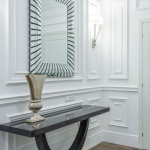
- Mirrors and gloss: A slim framed mirror placed opposite a sconce doubles perceived brightness.
Coordinate Fixtures and Finishes
- Consistent metals: Match fixture finishes to door hardware for a cohesive look.
- Shade materials: Fabric or frosted glass shades soften transitions and hide lamp sources.
- Visual rhythm: Repeat a compact sconce at regular intervals to guide the eye, but do not overcrowd.
Rugs and Art
- Runner rugs: Choose lighter tones or subtle patterns; avoid overly dark runners that drink light.
- Artwork scale: Keep frames flush to the wall and consider low-profile picture lights to avoid protrusions.
Common Mistakes and How to Fix Them
- One blinding fixture: A single high-output ceiling light creates glare and harsh shadows. Fix it by adding a linear ambient layer or wall lighting to distribute brightness.
- Too cool color temperature: 4000K+ can feel clinical in narrow halls. Drop to 2700–3000K or blend gently with 3500K.
- Fixture depth issues: Deep sconces encroach on already tight circulation. Choose ADA-friendly shallower models.
- Uneven scalloping: Recessed downlights too close to the wall cause distracting bright arcs. Use wall-wash trims or back them off and increase diffusion.
- No dimming: Without dimmers, night use can be jarring. Add dimmable drivers and compatible controls to set softer scenes.
Step-by-Step: How to choose lighting for a narrow hallway
The fastest route from dark tunnel to bright passage is a clear, methodical plan. Follow this sequence:
1. Document Your Envelope
- Measure length, width, and ceiling height. Note obstacles, soffits, and door swings.
- Record existing junction boxes and switch locations.
- Photograph the space in daylight and at night for reference.
2. Define the Experience
- Decide on a mood: cozy and warm, crisp and modern, gallery-like, or hotel-chic.
- Pick a target color temperature (most homes do best with 2700–3000K).
- Identify focal points (art, mirrors, wainscoting) that deserve accent light.
3. Build Your Layers
- Ambient: Choose between flush mounts, a recessed run, or surface linear LEDs. Prioritize evenness and diffusion.
- Accent: Add low-profile sconces, picture lights, or wall-wash trims for vertical brightness and interest.
- Guidance: Consider low-output baseboard strips or step lights for late-night use.
4. Select Fixtures That Fit
- Check depth: In very tight halls, aim for 4 in. projection or less on wall fixtures.
- Consider ceiling height: Flush vs. semi-flush vs. recessed. Avoid pendants below standard head height.
- Verify IP rating near exterior doors or damp zones if applicable.
5. Dial In the Specs
- CRI 90+ for faithful color.
- Beam angle 60–90 degrees for ambient; wall-wash optics for vertical light.
- Target 10–20 lumens per square foot, more for dark surfaces.
- Ensure dimmability and driver compatibility (TRIAC, ELV, or 0–10V).
6. Plan Controls and Scenes
- Choose dimmers or smart controls. Create Day, Evening, and Night scenes.
- Decide between occupancy or vacancy sensors based on preference.
- Coordinate switches so you can control from either end of a long hall (3-way or smart wireless).
7. Mock Up and Adjust
- Use painter’s tape to mark fixture positions and heights.
- Test portable lamps or temporary LED strips to preview brightness and glare.
- Refine spacing to eliminate hot spots and dead zones.
8. Install With Care
- Follow manufacturer clearances. Keep trims aligned on centerlines.
- Use opal lenses or diffusers to soften hotspots.
- Label circuits and test dimming range before closing up.
Placement and Sizing Rules of Thumb
- Sconce height: Typically 60–66 in. to the center above finished floor, adjusted for ceiling height and eye line.
- Sconce spacing: Every 6–8 ft for small fixtures; increase spacing with higher output or if using wall washing.
- Recessed spacing: Roughly equal to ceiling height (8 ft ceiling = about 8 ft spacing), adjusted to avoid scallops.
- Ceiling clearance: Keep fixtures high enough to maintain comfortable headroom and avoid glare as you pass underneath.
- Switching: For long halls, provide control at both ends for convenience and safety.
Case-Like Scenarios and Solutions
If Your Hallway Is Very Long and Windowless
- Use a continuous linear LED in a cove or ultra-slim surface channel for even ambient light.
- Add rhythm with small, shallow sconces every 8–10 ft to break monotony.
- Set an Evening scene around 40–50 percent output.
If Your Hallway Is Narrow and Short
- Pick one elegant flush mount or a pair of compact downlights with generous diffusion.
- Use a single mirror with a picture light to bounce light and create depth.
- Choose a warm 2700K lamp to keep it inviting.
If You Rent and Cannot Rewire
- Swap bulbs to 90+ CRI LEDs at 2700–3000K.
- Add battery-powered picture lights and peel-and-stick LED strips with diffusers under a slim molding.
- Use smart plug-in lamps in adjacent rooms to spill light through doorways and coordinate scenes with smart switches.
Budget and Sustainability
- LED efficiency: Compared to incandescent, expect 75–85 percent energy savings and 15,000–50,000 hour lifespans.
- Energy Star and DLC: Look for certifications that indicate efficiency and quality.
- Retrofit strategies: Surface-mount linear lights and smart bulbs reduce electrician hours while upgrading performance.
Installation and Safety Notes
- Code awareness: In many jurisdictions, fixtures in corridors cannot protrude excessively; aim for shallow sconces where clearance is limited. Always check local codes.
- Height and headroom: Maintain safe clearance for all users, including when doors are open.
- Circuit load: Group fixtures logically and verify dimmer load ratings to avoid flicker or early driver failure.
- IP ratings: If your hall abuts an exterior door with exposure to damp or tracked-in moisture, consider appropriate ingress protection near that threshold.
Putting It All Together: A Sample Narrow Hallway Plan
Imagine an 18 ft long by 3 ft 3 in. wide hall with an 8 ft ceiling and three doors on one side. Here is one clean, high-performance layout:
- Ambient: A continuous surface linear LED channel with an opal lens, mounted 4–6 in. off the wall opposite the doors, running the length of the corridor.
- Accent: Two shallow up/down sconces centered between doorways on the door wall to add vertical rhythm without blocking traffic.
- Guidance: A 3000K low-output strip in a baseboard channel near the floor, motion-activated for late-night paths.
- Controls: Smart dimmer with three scenes and a vacancy sensor at one end. Both ends have wireless companion control.
- Specs: 3000K, 90+ CRI across all layers; flicker-free drivers; dimmable to 1 percent for night mode.
Quick Buying Checklist
- Choose one consistent color temperature (2700K or 3000K are safest).
- Insist on CRI 90+ for flattering color.
- Favor diffusers and wall-wash optics for even, glare-free illumination.
- For wall fixtures, check that projection is 4 in. or less if your corridor is very tight.
- Verify dimmer and driver compatibility; test low-end dimming range.
- Look for flicker-free performance and reputable warranties.
- Plan two or more layers: ambient plus accent or guidance.
FAQs
How bright should a hallway be?
Aim for 100–150 lux (10–15 footcandles) of ambient light, with additional vertical illumination from sconces or wall washing to reduce the tunnel effect.
Can I use pendant lights in a narrow corridor?
Only if your ceiling is high enough and the pendant profile is very compact. In most slim halls, a pendant feels intrusive. Flush, recessed, or slim linear fixtures are safer choices.
What color temperature is best?
Most homes look great at 2700–3000K. If adjacent rooms use 3500K, matching that neutral white can prevent jarring transitions.
What about artwork and photos?
Use picture lights or wall-wash lighting to softly highlight art without glare. Keep frames flush and avoid deep shelves that protrude into the walkway.
Do I really need dimming?
Yes. Dimming is invaluable for comfort at night and for adapting to seasonal daylight changes. Ensure your lamps and drivers match your dimmer type.
How can I make a short hallway look longer?
Use rhythmic repetition (evenly spaced sconces or a continuous linear light), keep color temperatures consistent, and add a focal point at the far end such as art or a mirror with accent lighting.
Conclusion: Light Like a Pro in Slim Spaces
Transforming a cramped corridor is less about a single showpiece and more about strategy. Balance layers, favor vertical illumination, keep glare low, and choose lamps with high CRI and consistent color. Smart controls seal the deal with comfort and efficiency. With the guidance above, you have a field-tested roadmap for selecting fixtures and controls that make every passage feel brighter, wider, and unmistakably polished. That is how to choose lighting for a narrow hallway with confidence and style.