Harnessing the Breeze at Home: Weighing the Benefits and Drawbacks of Residential Wind Turbines
Harnessing the Breeze at Home: Weighing the Benefits and Drawbacks of Residential Wind Turbines
As energy prices fluctuate and climate concerns mount, more homeowners are asking whether the wind that sweeps across their properties can meaningfully power their lives. The question isn’t just technical—it’s practical, financial, and even social. Understanding the pros and cons of home wind turbines helps cut through hype and skepticism alike, offering a clear-eyed path to deciding whether a small wind system deserves a place in your yard—or on your balance sheet.
What You’ll Learn
This guide offers a comprehensive, real-world perspective on residential wind energy. You’ll see how small turbines work, what determines their performance, where they shine, and when they disappoint. You’ll also get actionable steps for site assessment, permitting, installation, and maintenance, plus ways to combine wind with solar and batteries for year-round resilience.
Residential Wind 101: How Small Turbines Work
At its core, a small wind system converts kinetic energy in the wind into electricity using a rotor (blades), a generator, and power electronics that condition electricity for your home or batteries. Most residential turbines are in the 1–20 kW range, sized to supplement or offset part of a home’s load. A complete system typically includes:
- Rotor and blades that capture wind energy; diameter strongly influences output.
- Nacelle and generator (or alternator), sometimes with a gearbox, mounted atop a tower.
- Tower—guyed or freestanding—raising the turbine to smoother, faster winds.
- Inverter and controller for grid-tied systems, or charge controller and battery bank for off-grid setups.
- Disconnects and safety gear, including braking systems and surge protection.
Key takeaway: Height and siting usually matter more than the turbine brand. A well-sited modest turbine often outperforms a larger unit stuck in turbulent, slow winds.
At-a-Glance: The Real Pros and Cons of Home Wind Turbines
Here’s a quick snapshot of the pros and cons of home wind turbines before we dive deeper:
- Pros: Low-carbon power, energy independence, excellent complement to solar, resilience during outages (with storage), good economics on windy rural/coastal sites, educational value, potential incentives.
- Cons: Strong wind resource required, variable output, tower height and aesthetics, noise and vibration if poorly sited, permitting challenges, wildlife considerations, ongoing maintenance, and sometimes long payback.
Wind Resource and Siting: The Make-or-Break Factors
For small wind, location is destiny. A turbine’s annual energy is roughly proportional to the cube of wind speed, which means a site with 6 m/s average wind can produce more than twice the energy of a site at 5 m/s—using the same turbine.
Assessing Your Wind
- Average wind speed: Aim for 5.5–6.5 m/s (12–15 mph) at hub height for viable economics; 7+ m/s is excellent.
- Height rules: Place the rotor at least 9 m (30 ft) above any obstructions within 150 m (500 ft).
- Roughness and turbulence: Open terrain (prairies, coastal land, hilltops) beats forests or dense suburbs.
- On-site measurement: If serious, consider a temporary anemometer mast for 6–12 months; otherwise, use local wind maps and nearby stations with caution.
Reality check: A perfect turbine in a poor wind regime won’t deliver. If your site is sheltered by trees, buildings, or topography, consider alternatives like solar or energy efficiency first.
Technology Types: HAWT vs. VAWT (and the Rooftop Myth)
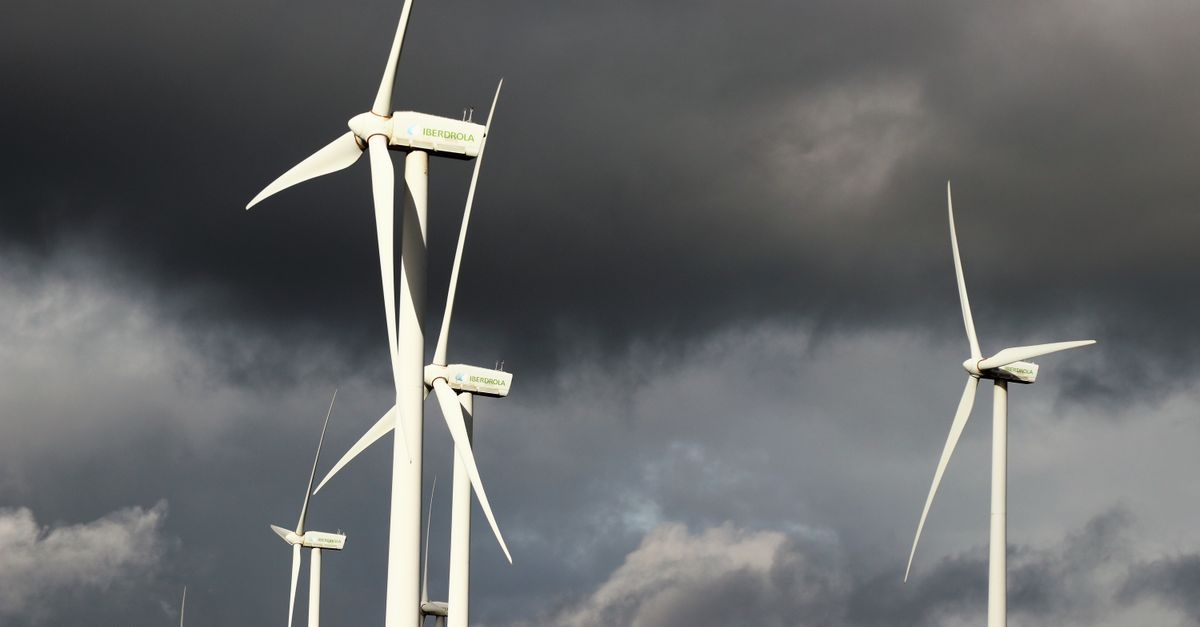
Most residential systems use horizontal-axis wind turbines (HAWT)—the classic three-blade design on a tower—because they’re efficient in steady winds. Vertical-axis wind turbines (VAWT) promise all-direction acceptance and easier maintenance at ground level, but they typically have lower efficiency and can suffer in turbulent flow.
- HAWT: Higher efficiency, proven performance; needs yaw control and clear wind.
- VAWT: All-direction intake; often better tolerance of gusts but lower energy capture per swept area.
A word on rooftops: Rooftop mounting seems convenient, but it often places turbines in turbulent boundary layers that slash output and increase noise/vibration. It can also stress roof structures. Rooftop small wind rarely meets expectations unless the building is unusually tall and exposed.
Performance 101: Power Curves, Capacity Factor, and Expectations
Turbines have a power curve that shows output vs. wind speed. Most small turbines “cut in” around 3–4 m/s, reach rated output at 11–12 m/s, and furl or brake at higher speeds for protection. What matters most over a year is the capacity factor—the ratio of actual energy produced to what would be produced at rated output 24/7.
- Typical small-wind capacity factors: 10–30%, highly site-dependent.
- Rotor diameter is crucial: energy scales with the swept area (πr²), not just nameplate kW.
- Tower height increases wind speed and cuts turbulence; each 10 m can deliver big gains.
Tip: Ask vendors for independent performance data and third-party certifications (e.g., IEC 61400-2). Beware of inflated power claims at unrealistic wind speeds.
Deep Dive: The Strengths Homeowners Value Most
1) Low-Carbon, Local Energy
A well-sited system can supply a substantial share of household electricity with near-zero operational emissions. This localized generation reduces line losses and supports a more distributed, resilient grid.
2) Energy Independence and Resilience
Paired with batteries, residential wind can keep essentials running during outages—especially beneficial when storms bring strong winds. Wind often complements solar by producing more in shoulder seasons and at night when the sun is down.
3) Potential Savings
On windy sites, small wind can offset a meaningful portion of your bill. In regions with strong incentives, grants, or favorable net metering, the economics can rival rooftop solar—particularly on coastal or plains properties.
4) Educational and Community Value
Turbines offer hands-on learning for families, schools, and local groups. They make energy tangible and inspire broader sustainability efforts.
5) Rural and Agricultural Synergy
Farms and rural properties often have the space and wind resource needed. Turbines can power irrigation pumps, cold storage, or electric fencing, with minimal land impact beneath towers.
Deep Dive: The Limitations and Trade-Offs
1) Strong Wind Is Non-Negotiable
Without a good wind regime, energy output plummets and payback stretches. Trees, buildings, and complex terrain degrade performance via turbulence and wind shadowing.
2) Intermittency and Seasonal Variability
Wind is variable. Even in excellent locations, production swings from hour to hour and season to season. Storage, demand flexibility, or a hybrid solar-plus-wind approach helps smooth output.
3) Towers, Aesthetics, and Viewsheds
A working turbine typically needs a tall tower—often 15–30 m (50–100 ft). Not all neighborhoods welcome this change in skyline, and homeowner associations may resist.
4) Noise and Vibration
Modern turbines are quieter than many expect, but not silent. At proper setbacks, sound may blend with ambient wind noise; sited poorly, it can be intrusive. Vibrations can transmit through rigid structures; isolation and proper foundations help.
5) Wildlife and Environmental Concerns
Small turbines pose lower risks than utility-scale projects, but siting still matters. Avoid migratory corridors and bat foraging hotspots when possible, and consult local wildlife guidelines.
6) Permitting, Zoning, and Neighbors
Expect to navigate permits, structural engineering for towers, and sometimes aviation clearances. Early and open communication with neighbors can reduce friction.
7) Maintenance and Reliability
Rotating machinery requires periodic inspection: bolts, guy wires, blades, bearings, electrical connections, and brakes. Budget time or a service plan; exposure to weather accelerates wear.
8) Economics Can Be Site-Specific
Installed costs vary widely. Payback depends on wind speed, energy prices, incentives, and system uptime. On marginal sites, returns can disappoint.
Numbers That Matter: Costs, Payback, and LCOE
Residential wind economics hinge on a few variables:
- Installed cost: Often ranges from $4,000–$10,000 per kW, including tower and balance-of-system, depending on height and foundation needs.
- O&M: Budget 1–3% of capex per year for maintenance and occasional component replacement.
- Annual energy: A 5 kW turbine at a 20% capacity factor produces roughly 8,760 kWh/year × 5 kW × 0.20 ≈ 8,760 kWh/year.
- Value of energy: Retail electricity rate, plus any credits from net metering or feed-in tariffs.
- Incentives: Tax credits, rebates, grants, and low-interest financing can shift the math.
Back-of-envelope example: Suppose a 5 kW system costs $35,000 installed, with a 30% tax credit reducing net cost to $24,500. At 8,000–9,500 kWh/year and $0.18/kWh retail energy, annual savings might be $1,440–$1,710, implying a simple payback near 14–17 years before O&M—reasonable for a long-lived asset on a windy site.
Grid-Tied vs. Off-Grid: Which Path Fits?
Grid-Tied Systems
- Pros: Simplified system (no batteries), highest efficiency, can export excess energy under net metering or similar programs.
- Cons: Grid outages typically shut down generation for safety unless paired with battery storage and an islanding inverter.
Off-Grid and Hybrid Systems
- Pros: True independence, ideal for remote sites, wind can charge batteries when solar underperforms.
- Cons: Batteries add cost and complexity; careful system design is essential to avoid under- or over-charging.
Hybrid strategy: Combining wind with solar and storage often delivers steadier year-round output and faster payback than wind-only, particularly where winter winds are strong.
Noise, Setbacks, and Being a Good Neighbor
Measured at the property line, well-sited small turbines often register sound levels in the 40–50 dB(A) range under normal operation—similar to a quiet office or light rainfall. Sound rises with wind speed but so does ambient rustling. Key practices:
- Respect setbacks and local sound ordinances.
- Choose larger rotors with slower tip speeds to reduce acoustic signature.
- Ensure proper yaw alignment and balanced blades to minimize tonal noise.
- Use vibration isolation in foundations and tower bases if near structures.
Wildlife Stewardship
Residential turbines are relatively small, but stewardship still matters. Avoid siting turbines near known raptor nesting sites or along narrow migratory flyways, and consider curtailment strategies (stopping the turbine) during low-wind, high-bat-activity nights in late summer and fall if your locale recommends it.
Permitting, Zoning, and Interconnection
Before purchase, consult your local planning department:
- Zoning: Height limits, setbacks, and aesthetic rules vary.
- Structural permits: Towers and foundations often require stamped engineering drawings.
- Electrical permits: Grid-tied systems must comply with NEC/NFPA and local codes.
- Utility interconnection: Net metering policies, anti-islanding requirements, and metering hardware.
- HOAs: Homeowner associations may restrict towers; clarify rules early.
Pro tip: Bring a professional site plan and manufacturer specs to early meetings. It signals seriousness and can accelerate approvals.
Installation and Maintenance: What to Expect
Installation Steps
- Site layout: Confirm setbacks, underground utilities, and crane access.
- Foundation: Excavation, rebar, and concrete pour sized for tower loads and soils.
- Tower erection: Guy-wire tensioning or freestanding lift; safety first.
- Electrical: Conduit, disconnects, inverter/controller placement, grounding.
- Commissioning: System checks, brake tests, data logging setup.
Maintenance Rhythm
- Quarterly–biannual checks: Visual inspection of blades, bolts, cables, and guy anchors.
- Annual service: Lubrication, torque checks, electrical inspection, firmware updates.
- Every 5–10 years: Bearing replacements or major component service depending on usage and environment.
Data matters: Logging output, wind speed, and downtime helps detect issues early and validates performance claims.
Case Studies: Where Residential Wind Works (and Doesn’t)
Windy Rural Acreage
A 10 kW HAWT on a 24 m tower in prairie country, average wind 6.8 m/s. Annual output ~24,000 kWh, offsetting most of a large home’s load. Payback under 12 years with incentives; strong neighbor support after sound demo.
Coastal Cottage
A compact 3 kW turbine on an 18 m tower, 7.2 m/s average winds in winter. Paired with 6 kW of solar and 10 kWh of batteries, the hybrid covers year-round essentials and thrives during storm seasons.
Suburban Cul-de-Sac
A 1.5 kW rooftop VAWT promised “urban wind” gains but sat in turbulent, slow air behind trees and houses. Output was a fraction of claims, noise annoyed neighbors, and the HOA intervened. A cautionary tale.
How to Evaluate Vendors and Offers
- Request third-party data: Independent certifications, long-term performance logs.
- Ask for reference sites: Visit an installed system in similar terrain and tower height.
- Scrutinize the power curve: Compare at realistic wind speeds (5–8 m/s), not only at 12 m/s.
- Clarify warranties: Turbine, tower, electronics, and workmanship; what’s covered and for how long.
- Service plan: Who climbs the tower? Response times? Spare parts availability?
Designing for Success: Practical Best Practices
- Go tall where allowed: Height boosts output and lowers noise; it’s usually the best investment lever.
- Oversize the rotor, not just the kW rating: Bigger swept area yields more annual energy in moderate winds.
- Optimize layout: Maximize distance from obstructions; consider prevailing wind direction.
- Plan for safety: Braking systems, lightning protection, and clear fall zones.
- Use hybrid thinking: Wind + solar + storage often beats wind-only on economics and reliability.
The Balanced View: Pros and Cons of Home Wind Turbines
Let’s synthesize what matters most when weighing the pros and cons of home wind turbines:
- Compelling when: You have verified average winds ≥ 6 m/s at hub height, supportive zoning, room for a proper tower, and access to incentives or fair export credits. In these conditions, residential wind can be a powerful, low-carbon ally—especially in hybrid systems.
- Challenging when: Winds average < 5 m/s, obstructions create turbulence, HOA restrictions block towers, or maintenance access is difficult. In such cases, focus on efficiency upgrades and solar-first strategies.
Bottom line: The technology is sound, but the site decides the outcome.
Decision Framework: Is Small Wind Right for You?
- Site: Do you have an open, elevated location with few obstructions?
- Height: Can you install a 15–30 m tower within local regulations?
- Data: Do wind maps, nearby stations, or on-site measurements support ≥ 6 m/s?
- Neighbors and aesthetics: Are you prepared to communicate and address concerns?
- Budget: Can you fund installation and long-term maintenance?
- Goals: Do you value resilience, education, and carbon reductions alongside ROI?
FAQs
How many homes can a small turbine power?
It depends on turbine size and wind. A 10 kW unit on a windy site might generate 15,000–25,000 kWh/year—enough for many efficient homes. A 1–3 kW turbine in moderate winds might offset only a fraction.
Are vertical-axis designs better for residential use?
VAWTs tolerate shifting winds but typically yield less energy per swept area. The right choice depends on your wind quality and goals; robust, certified HAWTs remain the most proven for home-scale power.
Will a turbine work during a grid outage?
Not by default for grid-tied systems. You’ll need batteries and an islanding-capable inverter. Off-grid systems continue operating if designed correctly.
Do turbines hurt property values?
Evidence is mixed and highly local. Clear communication, careful siting, and attractive tower designs reduce concern. In rural areas with visible infrastructure, impacts are often neutral.
What about birds and bats?
Residential turbines have lower risk than large wind farms, but responsible siting and seasonal curtailment where appropriate are best practices.
Putting It All Together
When homeowners weigh the pros and cons of home wind turbines, the single most honest answer is: it depends on your wind. If your property offers clear exposure and you can raise a proper tower, residential wind can cut bills, bolster resilience, and shrink your footprint—especially as part of a hybrid system. If your site is sheltered or tightly regulated, you’ll likely do better prioritizing efficiency and solar first.
Either way, the process of assessing your wind resource—learning how energy intersects with landscapes, seasons, and neighbors—delivers value in itself. With grounded expectations, good data, and thoughtful design, you can turn local breezes into a reliable partner at home.
Next Steps
- Check local wind maps and request an initial site assessment from a qualified installer.
- Verify permitting and HOA rules before spending on equipment.
- Model performance and economics with realistic wind speeds and capacity factors.
- Compare hybrid options that combine wind, solar, and storage.
- Talk to neighbors, visit an operating system, and collect third-party data.
With a clear plan and realistic view of the pros and cons of home wind turbines, you can make a choice that fits your site, your goals, and your budget—while harnessing the breeze in a way that truly works for your home.