Double the Power: Seamlessly Blending Wind and Solar for Reliable, Round-the-Clock Energy
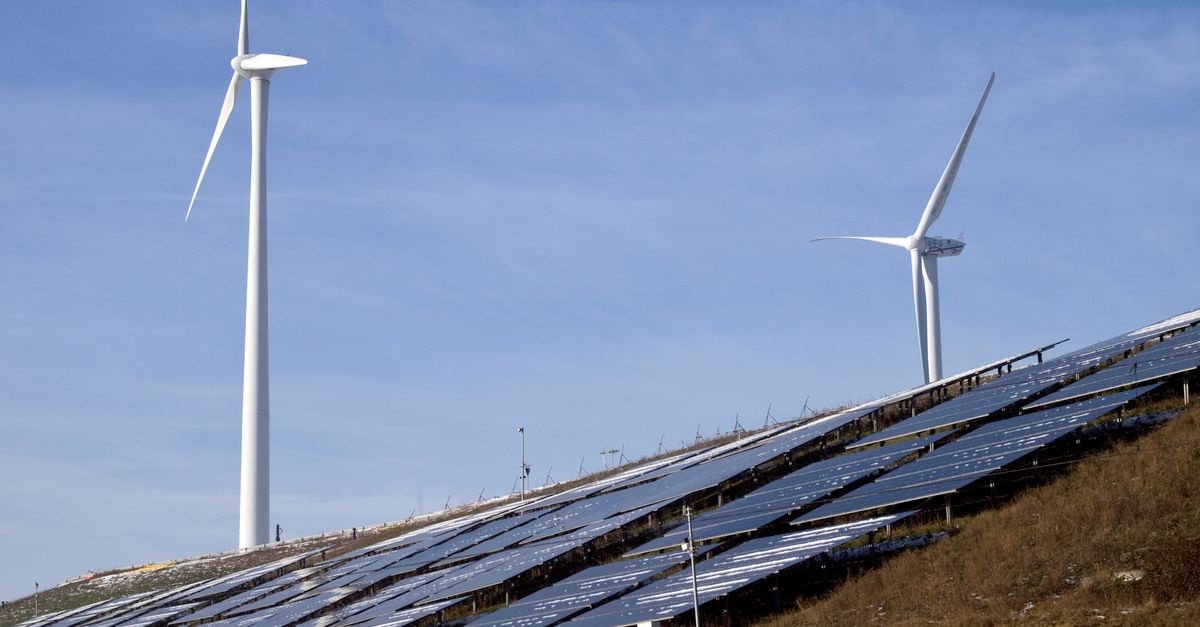
Wind and solar do not compete; they complete each other. When thoughtfully integrated with modern controls and storage, they smooth intermittency, boost capacity factors, and deliver dependable clean electricity day and night. This in-depth guide explains how to combine wind and solar energy across scales and contexts, so you can design a resilient hybrid that meets technical, financial, and environmental goals.
Why Pair Wind and Solar?
Combining wind and photovoltaic generation harnesses complementary resource profiles. In many regions, solar output peaks during midday and summer, while winds are stronger at night and in cooler months. Together, they flatten net-load curves, reduce storage needs, and trim the cost of delivered kilowatt-hours.
- Complementary timing: Solar delivers daytime peaks; wind often excels at night and shoulder seasons.
- Higher utilization: Hybrid plants can push interconnection assets and inverters closer to full use.
- Reduced curtailment: Coordinated controls lower overgeneration events and export limitations.
- Better economics: Shared infrastructure, O&M synergies, and improved capacity value enhance project returns.
- Reliability and resilience: Diversified generation mitigates weather risk and supports 24/7 power goals.
Core Principles: The Science Of Complementarity
Before diving into hardware choices, model the wind and solar resource to quantify their synergy. These steps are foundational to mastering how to combine wind and solar energy with confidence:
- Data resolution: Use at least hourly, ideally 5-minute, resource and load data for one to five years.
- Correlation analysis: Check diurnal and seasonal covariation to estimate smoothing and peak overlap.
- Capacity factor lift: Evaluate hybrid capacity factor versus stand-alone plants on the same interconnection.
- Curtailment modeling: Simulate grid constraints, export limits, and inverter clipping.
- Storage right-sizing: Quantify how much battery, thermal, or other storage you truly need to meet service levels.
Architectures That Work
At the heart of any hybrid is its electrical architecture. Each option affects efficiency, controllability, cost, and ease of permitting.
AC-Coupled Hybrids
In AC coupling, wind turbines and PV arrays each feed their own inverters, then connect at a shared AC bus or point of interconnection.
- Pros: Flexible retrofits; independent operation and maintenance; fault isolation; clear metering.
- Cons: Multiple conversion stages; potential for added losses; more switchgear and protection.
- Best for: Upgrading existing sites; mixed-age fleets; microgrids needing modularity.
DC-Coupled Hybrids
In DC coupling, PV strings and (in some designs) small wind rectifiers feed a shared DC bus that connects to a hybrid inverter and possibly batteries.
- Pros: Fewer conversions; excellent coordination; easier curtailment management; compact footprint.
- Cons: More complex controls; less off-the-shelf standardization for wind on DC; tighter engineering.
- Best for: New builds targeting efficiency, shared storage, and advanced energy management.
Hybrid Inverter With Shared Storage
A modern hybrid inverter can orchestrate PV maximum power point tracking (MPPT), wind input (via rectification and DC/DC), and a battery energy storage system on a common DC bus.
- Benefits: Tight dispatch control, high round-trip efficiency, streamlined compliance with grid codes.
- Considerations: Ensure inverter ratings meet ramp-rate and fault-ride-through requirements.
Microgrid Topologies
For campuses, islands, and communities, microgrids combine distributed PV, small wind, storage, and controllable loads behind a single controller capable of islanding and black start.
- Advantages: Local resilience; demand response; reduced transmission losses.
- Design keys: Protection coordination, droop controls, and transition performance when islanding and resynchronizing.
Step-By-Step: How To Combine Wind And Solar Energy
Use this roadmap to plan and execute a reliable hybrid system from concept to commissioning.
1) Define Objectives And Constraints
- Goals: 24/7 power, cost minimization, carbon targets, peak shaving, or ancillary services?
- Site: Land availability, zoning, noise limits, wildlife corridors, interconnection distance.
- Grid context: Export cap, time-of-use rates, demand charges, grid code requirements.
2) Gather High-Quality Data
- Resource: Solar irradiance (GHI, DNI), temperature, wind speed and direction at hub height.
- Load: Historical demand profiles; critical loads and flexibility.
- Market: Tariffs, PPA options, locational marginal pricing, capacity markets.
3) Model Scenarios
- Generation mix: Iterate PV-to-wind ratios to minimize cost and curtailment.
- Storage: Test batteries, thermal storage, or pumped hydro for ramp smoothing and firming.
- Controls: Evaluate DC versus AC coupling and EMS strategies for dispatch.
4) Select Hardware And Architecture
- Wind turbines: Choose rotor diameter and hub height optimized for site winds.
- PV modules: Consider bifacial modules, tilt angles, trackers, and albedo.
- Inverters: Hybrid inverters sized for peak DC; compliance with low/high voltage and frequency ride-through.
- Storage: Li-ion for fast response; flow batteries for long duration; hydrogen for seasonal needs.
5) Engineer Interconnection And Protection
- Point of interconnection: Right-size transformers, breakers, and relays.
- Protection coordination: Fault detection, anti-islanding, and grounding.
- Communications: SCADA, secure networking, and time synchronization.
6) Implement Controls And EMS
- Forecasting: Day-ahead and real-time solar/wind forecasts for proactive dispatch.
- Optimization: Cost- and carbon-aware scheduling with battery state-of-charge constraints.
- Ancillary services: Automatic generation control, frequency response, voltage support.
7) Validate, Commission, Operate
- Factory and site acceptance tests: Functionality, protections, ride-through.
- Performance guarantees: Availability, round-trip efficiency, response times.
- O&M: Predictive maintenance, condition monitoring, and cyber hygiene.
Right-Sizing: Balancing The Mix
One of the most impactful choices is the PV-to-wind ratio. This is where many designers truly learn how to combine wind and solar energy for their context.
- Match the interconnection limit: Overbuild DC capacity so aggregate output approaches the AC cap without chronic clipping.
- Chase the load shape: If evening peaks dominate, bias toward wind and battery; for midday peaks, add PV and demand response.
- Mitigate seasonality: In winter-peaking regions, favor wind or adjust PV tilt for cold months.
- Use stochastic analysis: Stress-test against weather anomalies and multiple forecast years.
Storage: The Flexibility Multiplier
Storage bridges gaps, enhances reliability, and increases revenue opportunities for hybrids.
Batteries
- Short duration (1–4 hours): Ramp-rate control, frequency response, peak shaving.
- Medium duration (4–8 hours): Load shifting, evening peak coverage.
- Chemistries: Li-ion for fast response; LFP for safety and cycle life; flow batteries for long durations.
Long-Duration Options
- Hydrogen: Excess generation to electrolysis; reconvert via fuel cells or turbines.
- Pumped hydro and gravity storage: Bulk shifting for diurnal or multi-day needs.
- Thermal storage: Chilled water, molten salts, or phase-change for building or industrial loads.
Where To Place Storage
- DC-coupled batteries: High efficiency for PV charging; minimizes interconnection congestion.
- AC-coupled batteries: Flexible retrofits; independent operation; useful for microgrids.
Controls, Forecasting, And Optimization
Intelligence unlocks the true value of a hybrid. A modern EMS coordinates PV MPPT, wind dispatch (where available), and storage to track targets and constraints.
- Multi-horizon forecasting: Blend numerical weather prediction with machine learning for 5-minute to day-ahead horizons.
- Optimal power flow: Respect grid constraints, minimize costs, and allocate battery cycles optimally.
- Adaptive ramping: Smooth output per interconnection rules and market participation.
- Resilience logic: Prioritize critical loads during outages; ensure fast islanding and black start.
Grid Integration And Compliance
Hybrid plants must be good grid citizens. Understanding interconnection and code requirements is essential to mastering how to combine wind and solar energy at scale.
- Ride-through: Low/high voltage and frequency ride-through, rate-of-change-of-frequency withstand.
- Reactive power and voltage control: Capability curves, power factor, dynamic VAR support.
- Ramping and dispatchability: Meet ramp limits; provide spin and non-spin reserves if contracted.
- Telemetry: Real-time data to grid operators; cybersecurity per standards.
Business Models And Financing
Hybrid projects succeed when technical design aligns with bankable revenue. The right contracts and incentives can materially improve returns.
- PPAs and tariffs: Shape delivery to match peak pricing; consider 24/7 clean energy contracts.
- Capacity and ancillary markets: Monetize capacity value and grid services from storage.
- Tax credits and incentives: Investment and production credits; bonuses for domestic content or energy communities where available.
- Shared infrastructure savings: One interconnection, one substation, combined O&M.
Siting, Land Use, And Environmental Stewardship
Hybrid plants must harmonize with natural and human environments.
- Wildlife and habitat: Pre-construction surveys; turbine siting to avoid migratory paths; bird and bat mitigation.
- Noise and visual: Setbacks, low-noise turbine models, glare studies for PV.
- Agrivoltaics: Co-locate crops or grazing under PV; maintain soil health and biodiversity.
- Community engagement: Early, transparent dialogue; share benefits via community programs.
Operations And Maintenance Excellence
Reliable operations determine lifetime value. A hybrid O&M program unifies wind, PV, and storage maintenance with advanced analytics.
- Condition monitoring: Turbine vibration, gearbox oil, blade integrity; PV IV-curve tracing and thermography; battery health and cell balancing.
- Predictive analytics: Machine learning to forecast failures and schedule proactive service.
- Spare parts logistics: Shared inventory for inverters, sensors, and communications gear.
- Performance KPIs: Availability, specific yield, curtailment rates, round-trip efficiency, revenue capture.
Use Cases Across Scales
Residential And Farmsteads
Small PV arrays with a micro wind turbine and a hybrid inverter can reduce bills and provide backup power.
- Priorities: Safety, code compliance, and simple user interfaces.
- Best practices: Right-size batteries for critical loads; use load control for HVAC and water heating.
Commercial And Industrial Campuses
Behind-the-meter hybrids cut demand charges and decarbonize operations.
- Strategies: Combine rooftop PV, parking canopies, and onsite wind; integrate building management systems.
- Revenue: Peak shaving, time-of-use arbitrage, and demand response participation.
Utility-Scale Hybrids
Co-located wind and PV with shared storage maximize interconnection value and grid support.
- Focus: Grid services, advanced forecasting, and robust EMS scheduling.
- Contracts: Hybrid PPAs that reward dispatchability and capacity contributions.
Avoiding Common Pitfalls
- Under-modeling variability: Use multi-year, high-resolution data; include extreme events.
- Poor DC/AC ratio choices: Balance clipping risk against interconnection utilization.
- Neglecting controls: A weak EMS can erase hybrid advantages; invest in proven platforms.
- Over- or undersizing storage: Let economics and service needs drive duration and capacity.
- Insufficient community engagement: Early outreach improves permitting and long-term acceptance.
Case Snapshots
The following scenarios illustrate practical pathways for how to combine wind and solar energy across contexts.
Island Microgrid
A coastal island installs 5 MW PV, 4 MW wind, and 10 MWh batteries using a hybrid inverter microgrid controller. DC-coupling PV and storage elevates efficiency; AC-coupled wind provides modularity. Results: diesel use drops 80%, outages decrease, and frequency stability improves via fast battery response.
Utility-Scale Co-Located Plant
Developers interconnect 100 MW wind and 120 MWp PV on a 100 MW AC limit with 50 MWh storage. Coordinated dispatch smooths ramps and meets ramp-rate rules. Despite occasional clipping, shared substation costs and improved capacity value lower the levelized cost of energy and attract a dispatchable clean PPA.
Industrial Campus Hybrid
An industrial site pairs rooftop PV, a mid-size wind turbine, and 4-hour batteries. EMS uses forecasts and tariff signals to shave peaks and cover evening demand. The system participates in demand response and reactive support, cutting bills and emissions while boosting resilience.
Deep Dive: Economics That Matter
To secure financing, translate technical gains into bankable metrics.
- LCOE and LCOS: Track hybrid LCOE alongside the levelized cost of storage for accurate comparisons.
- Capacity value: Hybrids with storage earn higher capacity credits by shaping output to critical hours.
- Revenue stacking: Energy arbitrage, ancillary services, capacity payments, and renewable credits.
- Risk management: Hedge weather variability through diversification and firm supply contracts.
Regulatory And Market Considerations
Rules shape what is possible. Mastering how to combine wind and solar energy includes understanding market design.
- Interconnection queues: Co-location can reduce queue times or leverage existing rights.
- Metering and settlement: Clarity on behind-the-meter versus front-of-the-meter arrangements.
- Grid codes: Ensure inverters meet ride-through, reactive power, and cybersecurity standards.
- Environmental permitting: Streamlined permitting via early studies and mitigations.
Design Details That Pay Off
- Trackers and tilt: Single-axis trackers can boost PV output; consider wind-induced loads and stow strategies.
- Bifacial gains: Optimize albedo and row spacing to increase rear-side production.
- Blade and site optimization: Larger rotors at moderate hub heights often maximize yield in low-wind regimes.
- Cable routing and losses: Minimize DC and AC losses; plan for thermal limits and voltage rise.
- SCADA integration: Unified dashboards for wind, PV, and storage streamline operations.
Resilience And Reliability
Hybrids can deliver power when it is most needed.
- Critical loads mapping: Prioritize essential services; use transfer switches and dedicated panels.
- Islanding: Seamless transitions with phase-locked control; re-sync protocols to the main grid.
- Black start: Batteries and inverters capable of energizing networks without external power.
- Redundancy: Spare capacity in inverters, communications, and controllers.
People And Processes
Technology only performs as well as the team behind it.
- Cross-disciplinary design: Wind, PV, storage, protection engineering, and software controls.
- Training and safety: Electrical safety, lockout-tagout, fall protection, and confined-space protocols.
- Data culture: Use analytics to inform maintenance, upgrades, and contract renegotiations.
Frequently Asked Questions
Is a hybrid always cheaper than stand-alone plants?
Not always. Savings depend on shared infrastructure, interconnection value, resource profiles, and controls. In many cases, hybrids reduce curtailment and boost capacity value enough to improve economics.
Which architecture should I choose?
Retrofits often favor AC coupling for simplicity. New builds targeting maximum efficiency and tight control may prefer DC coupling with a hybrid inverter and shared storage.
How big should the battery be?
Size storage for the services you want: 1–2 hours for ramping and reserves; 2–4 for evening peaks; 6–8 for substantial firming. Model costs, degradation, and revenue.
Can I run off-grid?
Yes, in microgrid configurations with sufficient storage, dispatchable backup (like a generator or hydrogen), and robust controls for islanding and black start.
How do I start planning?
Define goals, gather high-quality resource and load data, run scenario modeling, decide on architecture, and engage grid operators and communities early.
A Practical Checklist
- Resource and load data: Multi-year, high-resolution datasets secured.
- Architecture chosen: AC-coupled or DC-coupled aligned with goals.
- EMS vendor: Shortlisted and validated for required services.
- Interconnection plan: Limits, protections, and telemetry settled.
- Storage strategy: Duration and placement justified by modeling.
- Contracts: PPA or tariff revenue streams mapped.
- Permits and community: Stakeholders engaged; studies complete.
- O&M plan: Condition monitoring and spare parts strategy in place.
Putting It All Together
Mastering how to combine wind and solar energy is equal parts science and systems thinking. Start with complementary resource analysis. Choose an architecture that fits your site and goals. Right-size storage, specify a robust EMS, and align with grid codes and market incentives. Engage communities and design for maintainability. Do this well, and you deliver reliable, affordable, round-the-clock clean power.
Conclusion: Double The Power, Half The Headaches
Wind and solar, when orchestrated by smart controls and supported by storage, unlock a pathway to dependable, 24/7 clean electricity. By pairing complementary resources, sharing infrastructure, and optimizing operations, hybrids turn variability into value. Whether you are building a home system, a campus microgrid, or a utility-scale plant, the principles here show how to combine wind and solar energy into a cohesive whole that is resilient, economical, and future-proof.
Next step: Assemble your data, run a few optimized scenarios, and talk to an EMS provider who can demonstrate real-time control of a hybrid stack. The sooner you begin, the sooner you can deliver reliable clean energy around the clock.