Glide In with Confidence: A Step-by-Step DIY Guide to Installing a Roller Sliding Gate
Glide In with Confidence: A Step-by-Step DIY Guide to Installing a Roller Sliding Gate
If you want a driveway solution that saves space, looks sharp, and operates smoothly, a roller sliding gate is a top contender. In this comprehensive, DIY-friendly tutorial, you’ll learn how to install a sliding gate on rollers from the ground up: planning, foundations, posts, roller carriages, track, alignment, safety, and optional automation. Whether you’re refreshing an existing entrance or building a new one, this guide breaks the process into clear, practical steps backed by pro tips, tools, and troubleshooting methods.
Why Choose a Roller Sliding Gate?
Sliding gates on rollers maximize driveway space by moving parallel to your fence line, rather than swinging into the driveway. This helps in tight lots, sloped entrances, and areas with frequent vehicle or foot traffic. Compared with cantilever designs, roller gates often use ground track and roller carriages to support the load directly on the driveway surface, which can be easier to install for DIYers with basic masonry and metalworking skills.
- Space-saving: No swing arc; ideal for short or sloped driveways.
- Stable and smooth: Ground-supported on a track with roller carriages and guide rollers.
- Secure and stylish: Customizable frame and cladding to match your fence and home style.
- Automation-ready: Easily add a gate opener, rack or chain drive, and safety sensors later.
Project Overview: What You’ll Build
By the end, you’ll have a durable sliding gate moving on a straight, well-anchored track, guided by top rollers, captured by a catcher bracket, and stopped by robust end stops. You’ll understand how to install a sliding gate on rollers that stays square, glides quietly, and resists the elements year after year.
Before You Start: Permits, Codes, and Planning
Every great project starts with a plan. Contact your local building department to check permit requirements and setback rules, especially if your gate will be automated or connect to public walkways. In HOA communities, confirm style and height limits. Plan drainage and note any underground utilities before digging. A few calls now can save costly rework later.
Measuring and Site Assessment
Map the Gate Opening and Run-back
Measure the clear opening width (the space vehicles pass through) as well as the run-back space along the fence line where the gate will slide. The run-back should be at least the gate’s clear opening plus a few extra inches for hardware clearance. Check for obstacles—meters, downspouts, posts, or landscaping—that could interfere with the sliding path.
- Clear opening (CO): Typical driveways range from 10–16 ft (3–5 m).
- Run-back space: CO + 12–18 in (300–450 mm), depending on hardware.
- Height and style: Match fence height and determine cladding (wood, composite, metal pickets, mesh, or panels).
Evaluate Ground Conditions
Check slope across the opening and along the run-back. A gentle slope can be managed by adjusting roller heights or stepping the track; steep slopes may need grading or a cantilever design. Observe drainage: puddles and soft subgrade undermine track stability and roller longevity. If water collects along the gate path, plan a compacted base and add drainage channels.
Select Materials and Hardware
Choose a gate frame material (galvanized steel or aluminum are popular), then size the roller carriages, ground track, guide rollers, end stops, and catcher bracket for weight and span. Many kits list maximum load and post spacing. If you plan to automate later, select a frame that can accept a rack, chain, or belt drive.
Tools and Materials Checklist
Gather tools first so you can focus on the build. Here’s a solid baseline kit for learning how to install a sliding gate on rollers smoothly and safely.
- Measuring & layout: Tape measure, laser level or spirit level, string line, stakes, chalk line.
- Groundwork: Shovel, post-hole digger or auger, wheelbarrow, tamper or plate compactor.
- Concrete & steel: Rebar, rebar ties, form boards, bags of concrete mix, mixing tub or mixer, anchor bolts or chemical anchors.
- Metalwork: Angle grinder, drill/driver, metal drill bits, wrenches, sockets, clamps. (Welder optional for steel frames.)
- Gate hardware: Ground track (V-track or inverted U-channel), roller carriages with adjustable plates, top guide bracket with rollers, end stops, catcher bracket, bottom guide (if used), fasteners.
- Gate frame & cladding: Galvanized steel or aluminum frame members, wood/composite/metal infill panels, corrosion-resistant screws/bolts.
- Finishing: Galvanizing spray or zinc-rich primer, enamel or powder coat (if not prefinished), grease, weatherproof lubricant.
- Optional automation: Sliding gate opener, rack or chain, limit magnets, safety photo-eyes, beacon, keypad/remote.
- Safety gear: Gloves, eye/ear protection, steel-toe boots, dust mask.
Understanding Your Hardware
Tracks and Rolling Surfaces
- V-track: A V-shaped ground rail paired with V-groove rollers. Sheds small debris well; popular for driveways.
- Inverted U-channel or flat bar: Offers a broader rolling surface; ensure proper drainage to prevent grit buildup.
Choose a track compatible with your roller carriages. Ensure the track is straight, level, and well anchored to your concrete base. This is the backbone of smooth operation and a cornerstone of how to install a sliding gate on rollers the right way.
Roller Carriages and Guide Systems
- Roller carriages: Typically two, mounted to a base plate or adjustable brackets. They carry the gate’s weight.
- Top guide rollers/bracket: Keep the gate upright and laterally aligned against a support post.
- End stop and catcher bracket: Prevent overtravel and stabilize the leaf when fully closed.
Always verify the load rating of rollers and carriages against the final, fully clad gate weight. Bearings should be sealed for outdoor use; stainless or galvanized components resist corrosion.
Layout: Posts, Track, and Clearances
Marking the Line
Snap a string line representing the gate’s intended path, perfectly parallel to the fence and square to the driveway. Mark the positions for:
- Guide post: The post at the opening’s front edge that holds the top guide rollers.
- Catcher/receiver post: The opposite side of the opening that receives the gate end and holds the catcher bracket and end stop.
- Track line: The exact centerline of the ground track along the full run-back.
Confirm vehicle turning radius and pedestrian paths won’t interfere with the sliding arc.
Concrete Bases and Posts
Excavation and Footings
Strong foundations make or break your project—and they’re vital to mastering how to install a sliding gate on rollers. Dig post holes below frost depth (where applicable) and to a diameter about 3× the post width. For the track, prepare a continuous concrete strip or a series of pads connected by reinforced beam sections, depending on soil and load.
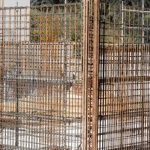
- Rebar grid: Tie rebar to form a rigid mat for the track bed, typically #3 or #4 bars (10–13 mm) depending on span and soil.
- Anchor points: Set anchor bolts or install sleeves for later chemical anchors to secure the track and roller base plates.
- Drainage: Add a gentle crown to the concrete or slightly recess the sides for runoff; integrate channel drains if needed.
Setting Posts
Use galvanized steel posts or heavy-duty structural posts rated for gate loads. Plumb the guide post and catcher post with a level, brace them, and pour concrete. Double-check alignment with your string line before the mix sets.
Cure Time
Allow concrete to cure to structural strength—typically 48–72 hours for light loads, longer in cold weather. Avoid mounting heavy components prematurely.
Installing the Ground Track
This step is central to how to install a sliding gate on rollers. Whether you’re using V-track or U-channel, accuracy matters.
- Dry fit: Lay out track segments along the string line. Ensure joints are tight and straight.
- Shim and level: Use stainless shims to achieve a true, level plane across the entire run-back, compensating for minor slab irregularities.
- Anchor: Drill holes and secure the track with expansion anchors or chemical anchors rated for outdoor loads. Space anchors 12–24 in (300–600 mm) apart, closer near segment joints.
- Seal and protect: If needed, run a bead of polyurethane sealant along edges to prevent water intrusion and grit collection under the rail.
Check the track for straightness with a string or laser. Small deviations compound into noise, binding, and premature wear.
Building or Preparing the Gate Leaf
Frame Fabrication
Assemble a rectangular frame from square or rectangular tubing. Add diagonal or mid-rails for stiffness. For aluminum frames, use robust corner brackets and rivets/bolts; for steel, weld and grind smooth, then prime with zinc-rich coating.
- Keep it square: Cross-measure diagonals; they should match to within 1/16–1/8 in (1–3 mm) on typical residential gates.
- Plan mounting points: Pre-drill or weld tabs for roller carriages, guide brackets, and the catcher.
- Weight management: Lighter is smoother. Choose cladding that balances privacy with manageable mass.
Cladding and Finish
Attach wood, composite, mesh, or sheet metal panels with corrosion-resistant fasteners. Seal wood on all sides; paint or powder-coat metals. Good finishing is part of how to install a sliding gate on rollers that lasts—protection prevents swelling, rust, and binding.
Mounting the Roller Carriages
- Position base plates: Mark the roller carriage base locations on the concrete so the gate’s weight will distribute evenly. Typically, carriages sit about one-third in from each end of the leaf’s bottom rail.
- Anchor the bases: Drill and fix with heavy-duty anchors. Don’t fully torque yet—leave room for adjustment.
- Set carriages: Place roller carriages on their bases. Adjust heights so the bottom rail rides level along the ground track with 1/2–3/4 in (12–20 mm) ground clearance, as specified by your hardware kit.
- Test roll: Without cladding (or with minimal temporary weight), roll the frame back and forth to confirm smooth travel and no derailment.
This staged approach simplifies how to install a sliding gate on rollers by letting you fine-tune alignment before adding full weight.
Top Guide Bracket and Rollers
- Mount the top guide bracket to the guide post at the right height so the rollers lightly contact the top rail or guide surface.
- Align for minimal friction: The rollers should center the gate without squeezing it. Too tight leads to noise; too loose causes wobble.
- Secure and test: Slide the gate through its full travel to ensure consistent contact and no racking.
End Stops and Catcher Bracket
Install a robust end stop on the open end of the track to prevent accidental overtravel. On the receiving side, mount a catcher bracket on the receiver post to stabilize the leaf when closed.
- Fine alignment: The catcher should support the leading edge without lifting the gate.
- Soft bumpers: Add rubber bumpers or dampers to reduce closing impact and noise.
Final Alignment and Adjustments
Square, Level, and Plumb
Now refine everything. Recheck track level, post plumb, and frame squareness. Use carriage adjustment bolts to tweak height and tilt until the leaf glides without rubbing or scraping. This precision is the hallmark of how to install a sliding gate on rollers like a pro.
Clearances and Stops
- Ground clearance: Maintain consistent clearance across the run-back.
- Side clearance: Ensure no interference with fence panels, pillars, or landscape.
- Travel limits: Confirm the gate doesn’t collide with posts or hardware at full open/close.
Optional: Add Automation
If you plan to automate, choose an opener matched to gate weight, duty cycle, and climate. Rack-and-pinion is common; chain drive works well for heavier leaves. Follow the manufacturer’s instructions for mounting the motor base, aligning the rack, setting travel limits, and wiring safety devices. A well-prepared manual installation—exactly how to install a sliding gate on rollers with precision—makes automation quick and reliable.
- Safety sensors: Install photo-eyes at recommended heights and test reverse function.
- Controls: Keypad, remote, or smart hub integration for convenience.
- Power and weatherproofing: Use outdoor-rated conduit, GFCI, and sealed enclosures.
Weatherproofing and Corrosion Control
Outdoor gates live hard lives. Seal the deal with protective measures:
- Metals: Use hot-dip galvanizing, zinc-rich primers, and UV-stable topcoats.
- Wood: Apply oil or exterior varnish on all faces and edges; maintain annually.
- Rollers and bearings: Choose sealed units; apply light, weather-resistant lubricant where specified.
- Track care: Keep debris off the rail; consider a small canopy or edging to deflect gravel and leaves.
Maintenance for Long-Term Smooth Operation
Knowing how to install a sliding gate on rollers sets you up for success; maintaining it keeps it that way.
- Quarterly: Clear track, wipe roller surfaces, check anchor tightness, test end stops, inspect catcher alignment.
- Biannually: Lubricate per hardware guidance; check for rust or finish wear; touch up coatings.
- After storms: Remove branches, gravel, or ice; verify gate doesn’t bind at travel extremes.
- Annually: Recheck post plumb and carriage adjustments; soil movement can require minor tweaks.
Troubleshooting Common Issues
- Rattling or wobble: Tighten top guide, adjust roller spacing, verify catcher bracket support.
- Binding or hard rolling: Check track straightness/level; clear debris; realign carriages; inspect wheel bearings.
- Uneven gaps: Re-square the frame; adjust carriage heights; shim the track where necessary.
- Noise over joints: Smooth track transitions; add rubber dampers; verify rail joints are flush.
Special Conditions: Slopes, Curves, and Drainage
Some sites complicate how to install a sliding gate on rollers, but solutions exist:
- Moderate slope along run-back: Step or taper the track; adjust carriage heights; ensure uniform ground clearance.
- Cross slope at opening: Raise/lower one side of track slightly to maintain square travel; avoid torsion in the frame.
- Poor drainage: Install a compacted base, French drain, or channel drain; elevate track edges to direct runoff.
- Gravel driveways: Pour concrete pads or a continuous strip under the track for stability.
Safety First: A Quick Checklist
- Pinch points: Keep hands clear of rollers and rack/chain interfaces.
- Stops and catches: Verify end stops, catches, and bumpers before regular use.
- Child safety: Use locks or automation with secure controls; maintain photo-eyes.
- Reflectors/lighting: Add visibility for night operation.
Time, Cost, and Skill Level
Learning how to install a sliding gate on rollers is well within reach if you’re comfortable with basic concrete work, accurate layout, and careful adjustment.
- Time: 2–4 weekends for concrete curing, frame fabrication, and installation.
- Cost: Varies widely by materials; plan for track and roller hardware, posts, concrete, and finish. Automation adds to budget.
- Skill: Intermediate DIY. Welding skills helpful for steel frames; bolted aluminum frames are more accessible.
Quick-Start Summary: How to Install a Sliding Gate on Rollers
If you prefer a bird’s-eye view, here’s the condensed process for how to install a sliding gate on rollers:
- Plan measurements, run-back, and drainage; verify permits and HOA rules.
- Set posts and pour a straight, level, reinforced base for the track.
- Lay, level, and anchor the ground track; confirm straightness.
- Fabricate or assemble the gate frame; keep it square and light.
- Mount and adjust roller carriages; test roll for smooth operation.
- Install top guide rollers; align for minimal friction.
- Fit end stops and catcher bracket; verify safe limits.
- Finish, weatherproof, and, if desired, automate with sensors.
Frequently Asked Questions
Do I need a continuous concrete strip for the track?
It’s best practice. While individual pads can work, a continuous reinforced strip ensures straighter rails, less settling, and easier alignment—key to how to install a sliding gate on rollers that stays smooth.
What if my driveway is gravel?
Pour a concrete strip or pads beneath the track. Gravel shifts and fouls rollers. A stable, clean rail path is fundamental to reliable rolling.
How heavy can the gate be?
Check the load rating of your roller carriages and track hardware, then keep the finished gate weight 20–30% below that maximum. Lighter gates last longer and stress parts less.
Can I automate later?
Yes. If you master how to install a sliding gate on rollers with precise alignment, adding a motor, rack, and safety sensors later is straightforward.
How do I handle a slight slope across the opening?
Shim the track to maintain level travel, adjust roller heights, and ensure the top guide keeps the frame square without excessive side pressure.
Pro Tips for a Flawless Finish
- Mock-up first: Temporarily mount carriages and roll the bare frame before cladding to find alignment issues early.
- Segment strategy: If your track comes in segments, stone-cut ends square and deburr; align joints over solid concrete with tight tolerances.
- Thermal movement: Leave small expansion gaps at rail joints; avoid binding in hot/cold swings.
- Hardware synergy: Use a single brand kit (track, carriages, guides) when possible for guaranteed compatibility.
- Finish inside edges: Seal all hidden faces of wood and internal steel corners—moisture finds the weak spots.
From Planning to First Glide
With careful layout, solid foundations, and precise alignment, you’ve learned exactly how to install a sliding gate on rollers that looks great and works flawlessly. The payoff is immediate: a secure, space-efficient entrance that glides at a touch. As you maintain the track and rollers, your gate will keep rolling quietly for years—and when you decide to automate, you’ll be ready.
Key Takeaways
- Accurate prep and drainage planning are nonnegotiable.
- Level, straight track and correctly placed roller carriages determine rolling quality.
- Top guides, end stops, and catcher brackets ensure stability and safety.
- Weatherproof finishes and routine maintenance preserve performance.
Your Next Step
Gather your measurements, sketch your layout, and source a matched hardware kit. Follow the steps above for how to install a sliding gate on rollers, and you’ll be set for that first satisfying glide. When you’re ready to elevate convenience, add automation with tested safety features for a complete, modern driveway solution.